
What are we consuming - Information or Junk?
AI Slop, Dead Internet Theory and Information we are consuming

Dear reader,
Welcome to ML Diaries.
With flooded inbox, pop-up notifications, reminders and advertisement surrounding us started to devouring my brain with just too much information(mostly AI generated) which is impossible to digest. While searching for authentic information in these wide network called Internet I came up with the question:
“WHAT ARE WE CONSUMING & WHY?”
Well, I will talk about the first one in this article but latter would be up to You.
Let’s talk about the content we are consuming on social media generated with AI known as AI slop which refers to the low-quality content lacking depth, nuance and originality created with AI lacking research and efforts, generated in bulk.
With more AI tools, we are generating more and more AI slop content. Some platform supports the use of AI with proper usage guideline while most prohibited it. More than 90% of internet will be filled with AI generated content [2].
AI Slop in Social media and Dead Internet Theory
With the increasing usage of AI agents in web to gain the authority and power to attract more customer for marketing campaign, becomes a new way of tracking and a hyper-personalized push notifications are the very example of this.
Social media like Meta introduces autonomous account powered by AI, many post on X (formerly twitter) is suspected to be having from bot while YouTube engineers were concerned for “the inversion” detecting fake views and AI generated videos[1].
AI slop includes images, photos, videos and social media posts seems original but unethical and can be misleading. Much of the content on social media is AI generated and keeps us in loop of scrolling. Social media instil ENVY and EMPATHY which was the main reason for our addiction to it. But what if this information is just a fallacy. Do we even care? Or knowing it will change anything?
AI tools enable people to generate content in seconds to minutes leading to bulk of information with poor quality and lack of depth. Even Wikipedia is fighting with AI generated content which is filled with low quality data and phony citations [3].
According to the DIT (Dead Internet Theory), the term introduced in 2016 states that much of the internet data dominated by non-human activity such as bot, AI and Web agents which is the reality of today. These things raise the questions on legitimacy, authenticity and originality of the information we consuming on internet.
In 2024, Bad bot traffic report published by cyber security firm Imperva predicted that nearly half of the traffic on internet will be automated - a number jumped from 42.3% to 49.6% from 2021 to 2023 and continue to grow in years ahead. Newguard a AI tracking company designed to identify sources of original information found that more than one thousand news sites run entirely by bots in their report (updated in May 2025).
Information can be misleading
Back in days, any form of information considered as a scared thing as it was considered precious and difficult to access. This will change when words engraved on paper with ink, followed by digitization to these days.
LLM models that consumes these information and learns from it are very much like ‘what it feeds is what it speaks’. The practice of training these models with synthetic data becomes a common approach for industries questioning the generation and limitations for these data as mentioned by MIT news.[4]
But what if these information is garbage or has no meaning, no depth – will these data help us or mislead us. What if these information are falsifying for political power or personal gain?
Adam Aleksic, a linguist and author of Algospeak: How Social Media is Transforming the Future of Language said in TIME that “The stakes are higher than just the internet. Humans, like large language models, learn from what they read. It’s not “just that bots are surrounding us”, “It's that we are starting to become more like the bots.”[5]
Guidelines for the usage of AI content
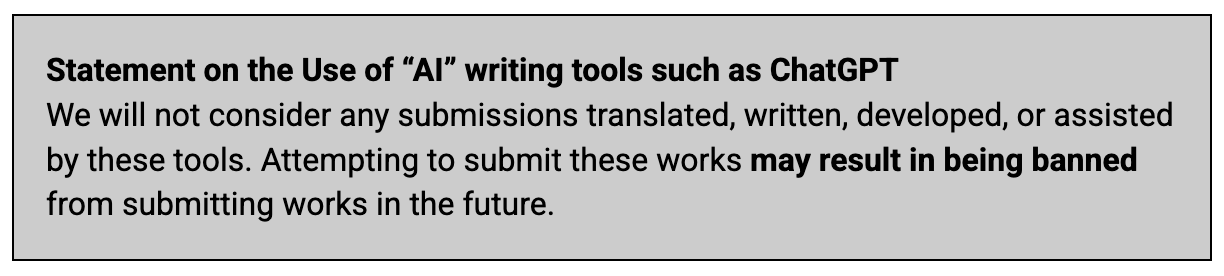
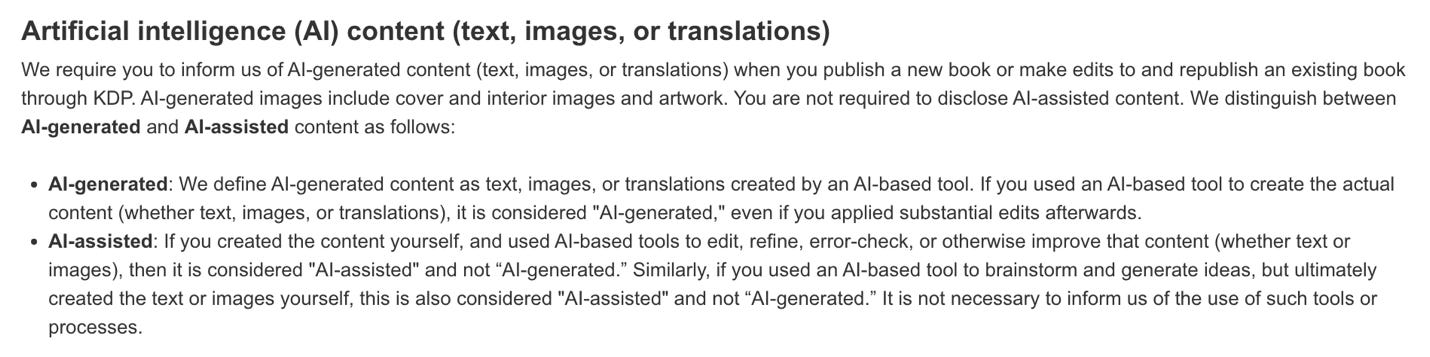
Many publications and magazines implemented strict policy for restricting AI content.
Clarkesworld Science fiction and fantasy Magazine prohibited AI generated content, while Amazon KDP implement guideline for the usage of AI in publishing kindle ebooks.
Spotify allows the AI generated music with strict rules and guideline while maintaining copyright content policy. Audible introduce Virtual voice program for AI generated narration.
While these platforms regulate the rules and guideline for the usage of AI, it still poses ethical concerns regarding transparency, privacy, authenticity, legality and trust issues for public opinion.
AI content in future
This AI generated content will lead to hyper-personalized content like real-time content customization based on your mood, history and preferences with evolving RL algo and AI Agents. AI generated scripts with deepfake technology which is difficult to distinguish between real and fake one could take over film industry and Streaming platforms with minimal human input to generate advance simulations. Automation with AI content will be the real challenge in many industry like questions about originality, ownership and authority will become more pressing.
AI will enhance the creativity by generating new ideas at our fingertips. We have to collaborate with AI content in future but how?, is one of the many open question we have regarding AI.
Ethical values
The usage of social media platforms are now governed by dopaminergic models rather than genuine human connections inviting many mental problems in young generations. This calls for strict regulation policies and ethical integration of AI.
Conclusion
We are now living in the era where information becomes easily accessible, which introduce the data delusion where processing too much data affecting our cognitive ability. Consuming these AI generated content from all over internet and social media affecting how we are shaping our life and future. Much of these are just slops and synthetic data with no proper authenticity and originality. Future will require us to collaborate with these information but what about the quality?
References
1. https://en.wikipedia.org/wiki/AI_slop
2. https://www.thefuturelist.com/how-artificial-intelligence-will-reshape-content-creation-by-2030/
3. https://www.theverge.com/report/756810/wikipedia-ai-slop-policies-community-speedy-deletion
4. https://news.mit.edu/2025/3-questions-pros-cons-synthetic-data-ai-kalyan-veeramachaneni-0903
5. https://time.com/7316046/sam-altman-dead-internet-theory/
8. https://en.wikipedia.org/wiki/Dead_Internet_theory
9. https://link.springer.com/article/10.1007/s00146-023-01857-0
10. “The Dead Internet Theory: A Survey on Artificial Interactions and the Future of Social Media”. Asian Journal of Research in Computer Science 18 (1):67-73.
Thank you for reading ML Diaries, You Are Awesome.
Feel free to share your thoughts in comments.